Wednesday, August 8, 2018

Incoming DBCR Students Prepare for Success

Incoming Students at DBCR Prepare for Success

(The school's colors are black and gold.)

DBCR’s motto, taken from St. Francis de Sales:  “Be who you are, and be it well.”
(Takoma Park, Md. – August 6) – School starts really early if you’re an incoming freshman or a transfer sophomore at Don Bosco Cristo Rey High School and Corporate Work Study Program in Takoma Park. The school’s new students reported for their three-week orientation program, called Bridge for Success, on Monday, July 30.
As new students arrive for the first day of Bridge, they’re greeted by Fr. Mike Conway, president (left); Jennifer Castaneda, assistant principal for student life (2nd from left); Ana Chapa, director of Corporate Work Study (4th from right); and Elias Blanco, interim principal (3rd from right).
DBCR is welcoming 123 freshmen and 4 transferring sophomores this summer, with a majority of girls (69 of them, 58 boys).

The orientation program, absolutely required of all incoming students, teaches the newcomers what’s expected of a DBCR student academically and behaviorally while they learn effective habits to be successful in the classroom, the workplace, and life.
After an opening prayer, Fr. Mike Conway introduces the new students to St. John Bosco and the Salesians.
Students learn the importance of coming to school or work on time, how to use the Washington area’s metro system, how to dress professionally, how to greet people, how to answer the telephone, how to file, keyboarding and use of computers, DBCR’s basic rules of conduct, and much more.
In the library, teacher Sylvia Pope (not pictured) introduces students to use of computers.
For example, on August 6 they spent most of their day with Ray Green, an executive at Chick-Fil-A who’s contracted by the U.S. Department of Labor (one of DBCR’s corporate work sponsors for many years) to instruct students about workplace issues such as safety, hygiene, sexual harassment, responsible use of computers and phones, etc.
On behalf of the Department of Labor, Ray Green grabs student attention as he speaks about basic workplace issues.
Bridge for Success is coordinated by interim principal Elias Blanco, Corporate Work Study director Ana Chapa, and Raquel Rodriguez. Numerous other faculty, staff, alumni, and current students lead or assist with various aspects of the program.

English teacher Lupita Garza gets students up and moving, prepping them for a public speaking exercise.

Sunday, August 5, 2018

Homily for 18th Sunday of Ordinary Time

Homily for the
18th Sunday of Ordinary Time

Aug. 5, 2018
Eph 4: 17, 20-24
Visitation Convent, Georgetown, D.C.

“I declare and testify in the Lord that you must no longer live as the Gentiles do” (Eph 4: 17).
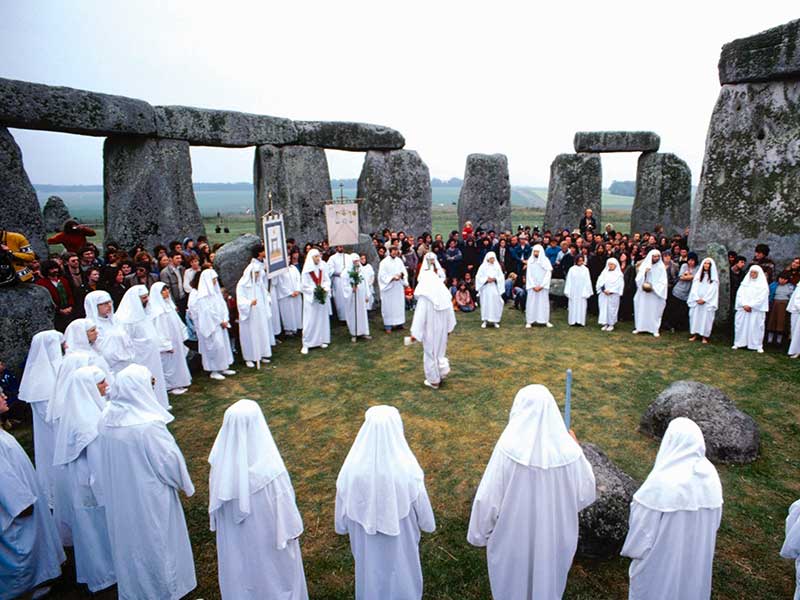
http://linesandprecepts.com/wp-content/uploads/2016/01/why_wicca_not_celtic_paganism.jpg
Recent news offers us evidence of “living as the Gentiles do,” i.e., like pagans, which is what St. Paul means.  Consider the brutal civil wars being waged in Syria, Yemen, South Sudan, and Congo, among other places; genocidal practices in Burma; the persecution of religious minorities in the Middle East and South Asia; drug wars in Mexico, gang wars in Central America, political strife in Nicaragua and Venezuela.  Etc.

Closer to home, what shall we say about the gun violence that explodes because someone has a grievance, real or imagined, or that takes place daily on the streets of Chicago (much worse than here in D.C.)?

Closer yet, the sad saga of Abp. McCarrick is the story of a priest who lived part of his life “as the pagans do”—assuming the credibility of what we’ve been hearing, and evidently Pope Francis so assumes.

Polls, such as those of the Pew Research Center, show over and over that as many as 89% of Catholics see nothing morally wrong with contraception; only half of self-described Catholics consider abortion to be morally wrong; only 35% say that homosexual behavior is wrong.

The latest Pew polling, out last week, concerns Americans’ church attendance.[1]  It reports that 28% of those who don’t go to services regularly (church, synagog, mosque, temple, etc.) don’t go because they’re non-believers.  Whatever their personal lives may be like, and they could be virtuous—they’re pagans.  37% don’t go to church because, they say, they have other ways of practicing their faith; further poll questions reveal, however, that their “other ways” aren’t very evident; they’re less involved in community, charitable, or social groups than churchgoers, tho more than non-believers are.  For practical purposes, these are semi-pagans.

In our reading from St. Paul, the lectionary skips 2 verses in which he briefly describes the Gentiles:  darkened in understanding, alienated from God’s life because of their ignorance, hard of heart, callous, licentious, practicing every kind of impurity to excess (4:18-19).  Some of his descriptions in other letters are even more explicit.
https://halloweduk.files.wordpress.com/2011/01/christian-sin.jpg
Paul’s description sounds like a great deal of Western society today, from Point Barrow to Tierra del Fuego, from Gibraltar to Moscow, and throw in Australia and Japan too, just as much as it does the Greece and Rome that Paul knew.  To a vast extent our culture justifies, even glorifies, “every kind of impurity to excess,” which I hardly need detail here.

Beyond that, we’ve degraded our human dignity in multiple ways, most nefariously by murdering our unborn, and in many places our sick and elderly as well; by creating human life in labs in order to destroy it as a means—they hope!—of curing diseases; by creating human life in labs like a manufactured product.  Let me read you a paragraph from medical ethicist Fr. Tadeusz Pacholczyk’s current online column in the Boston Archdiocese’s Pilot:

We encounter Promethean temptations today in the expanding fields of reproductive medicine and infertility. We may be drawn to the idea of “manufacturing” children through in vitro fertilization and related forms of assisted reproductive technologies. By producing and manipulating our children in laboratory glassware, however, we cross a critical line and sever our obedience to the Giver of Life. We assume the role of masters over, rather than recipients of, our own offspring. We allow our children to be mistreated as so many embryonic tokens -- with some being frozen in liquid nitrogen and others being discarded as biomedical waste. We take on the seemingly divine role of creating another human being and reigning supreme over his or her destiny.[2]

We’ve also degraded our human dignity by treating refugees like criminals; by scattering the ashes of the dead like fertilizer on our fields or fish food on the ocean; by discriminating against those who are different in skin color, religion, national origin, gender, or age.

All of this degradation of humanity is pagan behavior.

As already noted, many American Catholics think most of these behaviors are OK, if you believe polls about our acceptance of contraception, premarital sex, homosexuality, divorce and remarriage, even abortion—besides small numbers who indulge in racist, sexist, anti-immigrant, or other discriminatory attitudes and behaviors.

St. Paul tells the Ephesians, “That’s not how you learned Christ” (4:20).  Then he adds quickly, “assuming that you have heard of him and were taught in him, as truth is in Jesus” (4:21), with the consequence “that you should put away the old self of your former way of life, corrupted thru deceitful desires” (4:22), viz., their pagan way of life.  Paul himself had preached the Gospel at Ephesus.

And there’s the rub regarding American Catholics as indicated by the polling numbers:  a great number have never “learned Christ”; never been catechized in what we believe or how Jesus’ followers are supposed to live.  Too many parents, too many CCD programs, too many religion classes fell grossly short in their responsibilities.  It’s also been said that a great many baptized Catholics were never really evangelized, i.e., converted to belief in Jesus Christ as their Lord and Savior, as our evangelical brethren like to phrase it.  How else can you explain a 75% absentee rate on Sundays, week after week?

Even churchgoers may be showing up out of a sense of obligation or for social reasons; in other words, not out of conviction—not out of having heard and believed in the Good News of Jesus.  They’re not so different from the crowds who chased after Jesus, seeking a miracle, a healing, some free food, without recognizing in him the Son of God who feeds us with the bread of God’s love and eternal life (cf. John 6:24-35).

Saying you’re Catholic doesn’t mean you are in fact a disciple of the Lord, that you’ve been “renewed in the spirit of your minds and put on the new self, created in God’s way in righteousness and holiness of truth” (4:23-24).  That’s why we have errant priests, politicians who vote for abortion, laity who spout hatred for Muslims, immigrants, gays, and so on.

I’m not calling for a great conversion in the sisters, except insofar as the Lord calls all of us to daily conversion, as we do at the beginning of every Mass.  I know our lay friends are here out of conviction and not just for coffee and donuts later.

St. Paul  (Bartolomeo Montagna)
Yet St. Paul speaks also to us.  Maybe we have 1 or 2 pagan attitudes or opinions in our hearts that need to be shucked as “corrupt and deceitful desires” out of harmony with the teachings of Jesus—teachings voiced in the Gospels, voiced thru other biblical messages, voiced thru what the Church teaches today under the influence of the Holy Spirit given her by Jesus.
Beyond that, we have a part to play, maybe just a small part, in addressing the pagan culture around us.  We have the power of our example, so important, as we realize when we witness powerful bad examples.  We may also have the power of conversations and discussions with our friends, colleagues, or offspring—for which we need to be well informed of what the Scriptures and the Church teach.  We may have the power of interacting and teaching a young generation—grandchildren or students.  In our democracy, we have the power of speaking out, of writing to our representatives, of voting.  And, maybe most important, we have the power of prayer:  “Draw near your servants, O Lord, and answer our prayers with unceasing kindness.  Restore what you have created and keep safe what you have restored” (Collect)—the dignity of human beings and the goodness of creation.  Convert all of us, the powerful and influential and the least of us, from whatever evil lies in our hearts and minds and behaviors, so that we may live in peace and mutual respect and virtue and give honor to you, our Maker, here on earth and forever after.[3]


     [1] http://www.pewforum.org/2018/08/01/why-americans-go-to-religious-services/?utm_source=adaptivemailer&utm_medium=email&utm_campaign=18-08-01religiousservices&org=982&lvl=100&ite=2944&lea=654195&ctr=0&par=1&trk=
     [2] https://mail.google.com/mail/u/0/#inbox/1650988e27fd5818
     [3] I wish I’d seen this review of George’s Weigel’s The Fragility of Order before delivering the homily: http://www.ncregister.com/daily-news/george-weigel-on-the-state-of-the-world

Thursday, August 2, 2018

Gift to Rector Major to Celebrate His Visit

Gift to Rector Major to Celebrate His Visit

The Rector Major of the Salesians will be visiting the New Rochelle Province next month (Sept. 3-12), and to celebrate the special occasion the province wishes to make him a special gift.

by Fr. Abe Feliciano, SDB

Every year the Salesian Family is gifted by the Rector Major with the strenna, the theme usually being announced during the Northern Hemisphere’s summer season, followed by the publication of the Rector Major’s commentary on it on New Year’s Eve.

Inspired by the 2018 Strenna, “‘Lord, give me this water’ (John 4:15): Let Us Cultivate the Art of Listening and of Accompaniment,” the Salesian Family of North America wishes to make a lasting gift to the 10th successor of St. John Bosco, Fr. Angel Fernandez Artime, to commemorate his historic visit. Instead of a small souvenir that would be distributed to attendees at the various events scheduled for his visit, we are building lasting souvenirs in honor of the Rector Major that will benefit poor young people and their families for years to come: lifesaving water wells in the West African country of Ghana.

The water wells are to be constructed in one of the three poorest regions within Ghana, where scorching temperatures and the harsh desert landscape make potable water a scarcity.  For the people of these regions, accessibility to water is a matter of life or death.  Pope Francis drew attention to this reality in his encyclical Laudato Si’:

Water poverty especially affects Africa where large sectors of the population have no access to safe drinking water or experience droughts which impede agricultural production.  Some countries have areas rich in water while others endure drastic scarcity.

One particularly serious problem is the quality of water available to the poor. Every day, unsafe water results in many deaths and the spread of water-related diseases, including those caused by microorganisms and chemical substances. Dysentery and cholera, linked to inadequate hygiene and water supplies, are a significant cause of suffering and of infant mortality. (Laudato Si’ nos. 28, 29).

The cost of each well is projected to be $5,871.30, a very small price to pay to save, literally, the lives of thousands of children and their families.  Our goal as a Salesian Family is to sponsor at least three wells, possibly even four, in honor of Fr. Angel’s visit.  The preparatory committee for the Rector Major’s visit invites all members of the Salesian Family – SDB and FMA communities, Cooperators, Volunteers, our ministries, our youths and young adults, and all friends of Don Bosco – to contribute to this gift to our Don Bosco of today, by caring for those closest to his heart: young people and their families who are in dire need.


To make a donation to the Rector Major’s gift fund:

* In Canada: contact Fr. Luc Lantagne, SDB, at the Don Bosco Mission Office either by phone (514-648-4132) or by email (dbmo-omdb@hotmail.com)

* In the U.S.: contact Salesian Missions and at "Select a program," open the drop-down menu and select "Rector Major Water Project."

Photos: ANS

Wednesday, August 1, 2018

Salesians Promote Access to Clean Water

Salesians Promote Access to Clean Water as Basic Human Right

by Fr. Tom Brennan, SDB

(ANS – United Nations – July 27) – On Wednesday, July 18, the Salesians of Don Bosco co-sponsored an event on the human right to water with the Greek Orthodox Archdiocese, the Sisters of Mercy, Blue Planet Project, the Sisters of the Sacred Heart, and Public Services International. The event, entitled “Defining the Value of Water from a Rights-Based Perspective,” was part of the U.N.’s 2018 High Level Political Forum (HLPF). The panelists spoke of the ways that water is valued in communities, cultures, and faiths around the world.

Panelists who spoke for clean water at HLPF
This event was one of a series of collaborative efforts that the Salesians have organized to raise the consciousness of governments, U.N. agencies, and civil society groups about the essential role that water plays in the attainment of all human rights. The human right to water was explicitly noted in the preamble to the Sustainable Development Goals, the only human right explicitly noted in the SDGs, largely through the efforts of the partnership of the faith-based groups, Blue Planet Project, and Ambassador Caleb Otto from the Pacific island nation of Palau during the SDG negotiations.

In his opening remarks, Nicholas Anton of the Greek Orthodox Archdiocese quoted Pope Francis’s encyclical Laudato Si’, no. 30, on the human right to water: “Even as the quality of available water is constantly diminishing, in some places there is a growing tendency, despite its scarcity, to privatize this resource, turning it into a commodity subject to the laws of the market. Yet access to safe drinkable water is a basic and universal human right, since it is essential to human survival and, as such, is a condition for the exercise of other human rights. Our world has a grave social debt toward the poor who lack access to drinking water, because they are denied the right to a life consistent with their inalienable dignity. This debt can be paid partly by an increase in funding to provide clean water and sanitary services among the poor. But water continues to be wasted, not only in the developed world but also in developing countries which possess it in abundance. This shows that the problem of water is partly an educational and cultural issue, since there is little awareness of the seriousness of such behavior within a context of great inequality.” (emphasis in the original)

As water has become increasingly scarce and commodified, hundreds of millions of people around the world are denied access to water. And since HLPF 2018 reviewed the progress in achieving SDG 6: “Ensuring availability and sustainable management of water and sanitation for all,” those who have worked on water justice issues for years sought to remind the participants of the human right to water and the inherent dignity of all people. It has become increasingly clear, and troubling, that the implementation strategies promoted by international financial institutions have placed a heavy focus on private investment and for-profit delivery of essential services to provide basic human necessities like water and sanitation. This has led to systemic human rights violations and deepened the very inequalities the SDGs seek to combat.

Participants were reminded that water injustice has become acceptable practice in many places. The specific example of the immoral treatment of the people of Flint, Michigan, who were cut off from access to clean water and were forced to use contaminated and dangerous water without free and prior information before the change was effected was highlighted. The shutting off of water to homes in arrears on payment without seeking a solution to the problem was also noted. Both policies, initiated as cost-savings programs, violated the rights and dignity of the involved citizens and told them that they don’t matter. A call was made to involve local communities in the decisions that affect their lives, especially when their human rights and dignity are intimately involved in the decisions. Issues of income inequality and the need for a just and living wage are elements of a policy that will ensure that there is an enabling environment for protecting the human right to water. Investing in people by investing in infrastructure for the delivery of water and providing sanitation is more important than increasing profit margins.

The Global Water Justice Movement views water as part of the public trust, an essential part of the shared commons. Mobilizing local communities to protect the human right to water protects access to this essential resource for us all. Protecting access to clean, safe water and setting up affordability mechanisms to protect the most vulnerable populations is a moral imperative.

Read more about what the Salesians “on the ground” are doing to provide clean, safe water for communities around the world:


http://www.salesianmissions.org/news/clean-water-tanzania

Rector Major Thanks Cardinal Angelo Amato

Rector Major Thanks Cardinal Angelo Amato

(ANS - Vatican City – July 23) – On Friday, July 20, Rector Major Fr. Angel Fernandez Artime, accompanied by Fr. Pierluigi Cameroni, postulator general, met Cardinal Angelo Amato, SDB, prefect of the Congregation for Saints’ Causes, at the dicastery’s offices. Cardinal Amato’s term of office ends on August 31.

Fr. Angel Fernandez Artime and Cardinal Angelo Amato
In a very friendly setting, the Rector Major expressed thanks to Cardinal Amato from the Salesian Congregation and the Salesian Family for the service he has been doing with passion and generosity for the past ten years. More specifically, he spoke of the increased awareness in the Salesian Family of the patrimony of holiness that flourishes through Don Bosco’s charism.

For his part, the cardinal recalled the pastoral value that the causes of beatification and canonization represent for the Church and for a religious family like ours, recalling how Don Bosco was not afraid to present the high goal of holiness to young people, offering concrete models who had grown up in the Oratory at Valdocco. In particular, the deepening of the spiritual experience of the eminent members of our Family is a decisive element for understanding and developing the mission. In fact, in them we find our charism expressed in its most genuine form and its finest implementation, whether we’re speaking of the following of Jesus Christ and of educational and pastoral action.

Don Bosco, in fact, was not only personally a great saint, but he was also an exceptional teacher of holiness, proposing it to his boys as a joyful and accessible lifestyle and making it almost “breathe” in the environment of Valdocco. In Don Bosco these two aspects – personal holiness and commitment to educating young people to holiness – have been one single entity; nor can they can exist for us without each other.

Monday, July 30, 2018

Obedience Isn't Such an Awful Thing

Obedience Isn't Such an Awful Thing

By Fr. Steve Ryan, SDB

From Fr. Steve's The Don newsletter, July 28, 2018

I just left Tampa Thursday morning. After being here for six years and loving it, now I’m going to live the next chapter of my Salesian life in New York. I have a new assignment which comes to me through the vow of obedience. It was issued to me by my religious superior, the provincial. My new assignment was given to me with consideration for my gifts and talents, and there is even a bit of a promotion with it, but… it’s not my first choice. My first choice would be just to stay in Tampa for another six years. However, I have no option – I have to move. Why? Because I took the vow of obedience. You can’t make a vow to Almighty God and then make up your own rules on how and when and where it applies. In a marriage you can’t stand before the altar and tell your spouse that you promise fidelity, permanence, total transparency and unity, then spend the next 50 years doing your own thing. It won’t work. The marriage would be a farce. It’s the same thing for the vows that a consecrated religious takes. Where the “rubber hits the road” is when you live those evangelical counsels in concrete ways.
Ordinand (Deacon Abe Feliciano) promising obedience to his lawful superiors before his ordination 
to the priesthood by Bishop Luc Van Looy, SDB. Photo by Fr. Franco Pinto.

How does a religious sister or brother “take a change” brought about by obedience? There is only one way – take it cheerfully. God has something good awaiting us in the next chapter of our lives. Say it – “Thy Will be done.” God worked great miracles through his Saints because of their humble obedience! By cheerfully going where we are asked to go, we free our hearts, minds and souls for a greater part of God's plan.

When stuff happens in life – like sickness, divorce, unemployment, addiction, accidents, even unexpected deaths – and this stuff is thrown on us directly or indirectly, we have no choice but to deal with it. Deal with the “plate” put in front of you. Eat the plate served. Also, live the commitments you made and deal with the people to whom you’ve made those commitments. When the playing field changes as the game goes along – deal and adapt. Hang in there!

Fr. Steve Dumais SDB said something in our parish bulletin once: By obeying when it’s hard, God gives us a beautiful gift, if we can but grasp its importance. We get to substitute HIS WILL for our will. If we are spiritually open and compliant we can be God-like by accepting humbly. By being cheerfully obedient, just like our favorite Saints, we free ourselves for the totality of the mission – the mission that Jesus wants for us at this present moment in our lives. For a religious brother, priest or sister, it’s the mission which our superior has set before us.

Let’s remember to rely on our Blessed Mother and let’s remember that she always “has our back”. She is such a support for us in remaining obedient to the Will of God! Our total trust in God will allow us to more fully be His instruments. Mary, the Blessed Mother, is the perfect instrument and vessel. She calls us and encourages us. Obedience isn’t such an awful thing! 

Sunday, July 29, 2018

History keeps you in touch

“History keeps you in touch with the origins of what you do.”

Interview with British SDB Historian Fr. John Dickson

By Clarence Watts, SDB

(ANS – Johannesburg, South Africa – July 26) – Fr. John Dickson was born in Iran, where his dad was working for an oil company. During a political crisis in Iran, his family was expelled from Iran. He was six weeks old when they were expelled, a refugee at a very young age! This year he celebrates 50 years as a Salesian [August 15]. He is currently rector of the Salesian community in Chertsey, England, governor of a school of 1,500 pupils, and also Royal University chaplain, now in his sixth year. During his stay in Johannesburg for history research, he was interviewed by the Southern Africa Salesian Bulletin, “Don Bosco Echo.”

What is the state of youth in Europe? How do you view the situation?

Youth in Europe. At the university: 47% no religion, 33% Christian, 4% Muslim, 1% Jewish, 1% Sikh, and 2% Hindu. A very secular atmosphere at university.

Young people very strongly long for a sort of relationship, an authentic relationship. Young people are searching for belonging, finding their way. A place that is welcoming.

My role as chaplain: an educational role, to help people understand that people of faith are not peculiar; they are open to life.

I go to Muslim prayer and Hindu prayer; you are there with them, and they want to see that you care about them and pray with them.

History: How did it start and who influenced you?

As a child we had a public library which was free. Every Saturday morning my mother encouraged me, and we would walk to the library; borrow books and read them. It was a great way to spend a Saturday morning. I like stories and I like history; I think it is written into my DNA, this love for stories and history. The Scottish people have a passion for sharing stories, similar to the Celts. “If you ask me a question, I will end up telling you a story.” 

My novice master, Fr. Martin McPake, got me interested in historical research. Five years after my ordination, I taught at the seminary; I did my doctorate on the history of Salesians in England.  [Blogger’s note: Fr. John’s dissertation was published by the Salesian Historical Institute in Rome in 1991: The dynamics of growth: The foundation and development of the Salesians in England.  Amazon has 1 copy, paperback, in stock, listed for $39.66.]

History is not just a set of stories; its about life stories of people. Salesians are good at making history but useless at writing history.

What brought you to South Africa?  

I am writing about one of the pioneers of the AFM [Southern Africa] Province, Fr. [William] Ainsworth [d. 2005], who was the first provincial delegate to South Africa [when Southern Africa was part of the Anglo-Irish Province]. He was born in 1908, trained as an engineer, became a Salesian. He was a very open-minded person and a man of fairness. A man of great wisdom.

Why is it important to preserve the memory of Salesian history, our heritage?

If you don’t know the tree which you are a branch of, you are in danger of clipping yourself off. In other words, if you don’t understand where you come from, then the danger is you think you are doing something new, and you end up chopping yourself off from the whole tree.

It is also a question of identity. The history of a province and the history of the Congregation is a question of identity. There must be a dialogue between your present situation you are living in and your origins. As Vatican II said, “Be aware of the deposit of faith and how to adapt to the present times.” If you end up only talking about what happened in the past, you will die, and if you just talk about what is happening in the minute, the present, you just become current and disappear very quickly.

Saturday, July 28, 2018

Homily for 17th Sunday of Ordinary Time


Homily for the
17th Sunday of Ordinary Time

July 29, 2018
Ps 145: 10-11, 15-18
Nativity, Washington, D.C.

“You open your hand and satisfy the desire of every living thing” (Ps 145: 15).

In the life of St. John Bosco there are at least 3 instances in which he worked a multiplication miracle.  One instance in 1849 involved humble boiled chestnuts, a treat for 600 of his oratory boys returning from a hike to a cemetery on All Souls Day.  Because of a communications lapse, an insufficient supply of the goodies had been prepared.  Don Bosco just ladled them out to every boy like the supply was endless.  And it was.[1]

(art by Nino Musio)
Better known is the time in October 1860 when the Oratory ran out of bread—the baker having cut off credit—and there was but one basket of rolls to give the hundreds of boys for their meager breakfast.  But Don Bosco personally handed out the rolls—not his usual practice.  Every boy got his breakfast, and the one basket was still full at the end.[2]

And there was a feastday in the late 1840s when the sacristan, aware that there were just a few consecrated hosts left in the tabernacle, prepared a big, full ciborium for Mass but then forgot to put it out at the altar.  When hundreds of boys came forward for Communion, Don Bosco was taken by surprise, with almost no hosts to give them.  A quick prayer—and Communion for everyone who came to partake, with the original number of hosts left over.[3]

Ps 145—part of which was our responsory this evening—for ages was a customary prayer of blessing before meals in religious houses and institutions.  As a whole, it’s a prayer of praise to God, the Lord of creation; a praise of God’s dominion established by his providence and his righteousness.  Observing all his wondrous creation and his wondrous deeds, all of humanity responds by glorifying him.[4]  The psalm reminds us of God’s providence toward his people in the past and invokes it in the present.

We just recalled 3 ways in Don Bosco’s life in which God provided for his people, for the poor boys of the Oratory of St. Francis de Sales who were abandoned in one way or another until Christ and his Mother brought them to Don Bosco, 3 ways in which the Lord opened his hand and satisfied the desires of those poor little ones.

God “satisfies the desire of every living thing.”  He gave Don Bosco’s boys chestnuts as a treat; he gave them the bread they needed for the day; he gave them the Bread of eternal life.

In the Scripture readings for today, we hear of God’s providing his people with their bread for the day, miraculously providing it:  Elisha feeding 100 people with a mere 20 barley loaves, and some was even left over (2 Kgs 4:42-44); and Jesus feeding 5,000 men, besides the women and children, with 5 barley loaves and 2 fish (John 6:1-13).  We know, moreover, that Jesus was feeding the crowd with more than bread and fish.  They were coming to him hungering for life—in hope of healing for their bodies, some of them; and healing for their hearts, most of them.  Jesus fed their souls as well as their bodies by teaching them; John doesn’t mention that, but Mark does (6:34), and of course all the evangelists speak extensively of how Jesus taught the people.

A 15th-c. New Testament
with illustration of the miracle
of the loaves and fish
St. John reports that, feeding the crowd with these 5 loaves, “Jesus took the loaves, gave thanks, and distributed them” (John 6:11).  That’s eucharistic language; John even uses the verb eucharistésas for “gave thanks”—foreshadowing what is to come as we continue to read John 6, as we shall do for the next 4 weeks.

While in Matthew, Mark, and Luke, Jesus tells the apostles to distribute the loaves and fish to the people, in John Jesus does it personally.  He personally cares for his flock.  There’s no more personal way that he cares for his flock than by feeding us with his own Person in the Eucharist, opening his hands to satisfy the deepest desires of our living souls:  the desire for a union of our hearts with Someone, the desire of our hearts for eternal life.  Jesus will speak of that in coming weeks in relation to the bread that he gives us which is neither barley nor the manna of Moses.

Thru Jesus, God does directly open his hand for his people to satisfy the desires of our souls, thru the Eucharist, thru consolations, thru forgiveness, and in other ways.  But God also uses us—needs us—to be his open hands to satisfy people’s desires.  To paraphrase St. Paul (2 Cor 1:3-4), we can offer to the sorrowful, the lonely, the frightened the same consolations, companionship, and encouragement we have ourselves received, from Christ or from others.  We can commend the virtues of our relatives, friends, and colleagues, encouraging them to persevere in their Christian discipleship.

When we pray in the Our Father that God give us our daily bread, we’re not asking only for the Eucharist but also for the bodily food that we need.  “He opens his hand to satisfy the desire of every living thing.”  Certainly God has made the earth rich enuf to satisfy the hunger of every human being.  If some go hungry—and millions do, every day—it’s not for lack of God’s providence but for human selfishness:  the greed of warlords who destroy crops, plunder herds, destroy villages, and compel people to flee for their lives; the greed of wealthy landowners who begrudge their peasant neighbors a patch of land to farm or a living wage; and perhaps even the gluttony of the Western world that grossly overeats and so uses a grossly disproportionate share of the world’s agricultural resources.

In the Our Father we also pray, “Thy kingdom come.”  May the Lord’s dominion be recognized.  May it be present among us.  That could be a prayer for the 2d coming of Christ.  It’s certainly a prayer that we may place ourselves under God’s rule.  Jesus announced that the kingdom of God was at hand.  In part, his kingdom is evidenced by our lives.  One of the formulas for dismissal at the end of Mass is, “Go in peace, glorifying the Lord by your life.”

We who have been blessed with so many material blessings can open our hands to the less fortunate, imitating the Lord of creation who is “holy in all his works” and “near to all who call upon him” (Ps 145:17-18).  Opening our hands might involve offering food for the body, as when the parish has a food drive for the needy at Thanksgiving or other times, or helping with a food pantry or soup kitchen.  Wasn’t it a marvelous thing that Judge Brett Kavanaugh, on the same day that he was nominated to the Supreme Court, kept his appointment to help at Catholic Charities’ soup kitchen, and without any fanfare?  Just helping God open his hand to satisfy the desires of his hungry people.

There are, of course, numerous other desires that people have which we can help the Lord to satisfy.  Feeding the hungry is but one of the corporal works of mercy identified in the Catechism of the Catholic Church.  Others include sheltering the homeless, clothing the naked, visiting the sick and imprisoned, burying the dead, and giving alms to the poor.[5]  There are also 7 spiritual works of mercy.  It seems to me that somewhere in these lists we ought to include also defending immigrants and the victims of racism and speaking up for the unborn and single moms and the genuine needs of the elderly and sick (which do not include assisted suicide).

So, yes, God does “open his hand to satisfy the desire of every living thing,” both simple desires like chestnuts and other treats, and serious desires, both material and spiritual.  We may be sure that our Lord Jesus meets some of those desires directly; but, as he did thru Don Bosco some 160 years ago, God often relies upon us to be his open, generous hands.


      [1] BM 3:404-405.
      [2] BM 6:453-455.
      [3] BM 3:311-312.
      [4] See José Maria Casciaro et al., eds., The Navarre Bible: The Psalms (NY: Scepter, 2003), p. 463.

Wednesday, July 25, 2018

Nicaragua Pro-government Paramilitaries Try to Kill Salesian Bishop

Nicaragua Pro-government Paramilitaries Try to Kill Salesian Bishop

Bishop Mata Guevara “Miraculously” Escapes Ambush

(ANS – Masaya, Nicaragua – July 24) – On July 15, in what appears to have been a planned attack by paramilitaries, the car in which Salesian Bishop Juan Abelardo Mata Guevara was hit by a barrage of bullets fired by an armed group on the road between Managua, the capital of Nicaragua, to Masaya, where several Salesian works are located. The bishop and his driver miraculously escaped unharmed; the car’s windows and two tires were destroyed by a dozen bullets.

“In all likelihood, that was a failed attack,” says Fr. Francisco Rodriguez “Paco” de Coro, SDB. It seems quite evident that the Church of Nicaragua is in the crosshairs of the violent repression which the Sandinista government of President Daniel Ortega has implemented against anyone who opposes the regime. Bishops, priests, and friars had attempted to act as mediators. Now, because they are working to help the victims and refugees during these tough times, they have been moved to the top of the “black list” of Ortega’s opponents by the so-called “Turbas,” the pro-government groups of paramilitaries, fomented also by different organs of communication that have defined the religious as “traitors.”

This recent attack targeted Bishop Juan Abelardo Mata Guevara, SDB, 72 years old, who has been bishop of Estelí since 1990. He is a former president of Nicaragua’s Bishops Conference and a member of the episcopal commission charged with mediating dialog between the government and civil society. His is one of the most critical voices against President Ortega’s government.

Roberto Petray, the bishop’s assistant, said the bishop “was intercepted by paramilitaries, who fired bullets at the car, breaking glass and trying to set fire to it.” Escaping unharmed, the bishop took refuge in a house, where National Police agents showed up and escorted him safely to Managua.

Source: Vatican Insider and Paco de Coro, SDB

Sunday, July 22, 2018

Fr. Vincent Paczkowski, SDB (1955-2018)

Fr. Vincent Paczkowski, SDB (1955-2018)

Fr. Vincent Paczkowski was called home to the Lord, from Surrey, B.C., on the afternoon of July 21 after an illness that appeared in May and required chemotherapy. That, however, did not help his condition, and earlier in July he had it discontinued.

Fr. Vince had just taken up a new assignment at Our Lady of Good Counsel Church in Surrey in November 2017. He was 63 years old and had been a Salesian almost 43 years and a priest for 32 years.

Vince was born in Jersey City, N.J., to Vincent and Hedwig Paczkowski on April 28, 1955, and was baptized at St. Anthony’s Church in Jersey City. He grew up in Secaucus, where he was confirmed at Immaculate Conception Church. He entered Salesian Junior Seminary in Goshen, N.Y., in 1970. Years later he recalled, “What led me to become a Salesian was when I went on a Salesian vocation retreat, it was the way the Salesian priests and brothers interacted with us especially during recreation time. Their joy and friendliness had an impact on me.” 

After his high school graduation entered St. Joseph’s Novitiate in Newton, N.J., in 1974. He made his first religious profession in Newton on September 1, 1975.

Bro. Vince taught briefly at Salesian High School in New Rochelle, N.Y., and Mary Help of Christians School in Tampa and was on the staff of Don Bosco Retreat Center in Haverstraw, N.Y. Following theological studies at the Pontifical College Josephinum in Worthington, Ohio, from 1982 to 1986, he was ordained at Our Lady of Perpetual Help Church in Pelham, N.Y., on May 25, 1986.

Almost his entire priestly ministry was in parishes as youth minister and assistant pastor: Mary Help of Christians in Manhattan (1986-1995), St. Thomas the Apostle in Harlem (1995-1997), St. Anthony of Padua in Elizabeth, N.J. (1997-2005), Corpus Christi Church in Port Chester, N.Y. (2007-2014), and Our Lady of the Valley (2014-2017). Of this he wrote in 2015, “The ministry that satisfied me the most was my work with youth in theater in a parish setting. I had the opportunity to do this for 18 years, and often I look back at it with great satisfaction.”

Fr. Vince was also on the retreat team at Don Bosco Retreat Center in Haverstraw-Stony Point from 2005 to 2007.
Fr. Vince and then-Bro. Mike Eguino entertaining fellow retreatants 
at Don Bosco Retreat Center in August 2010.
At the time of his 25th anniversary of ordination, in 2011, Fr. Vince wrote: “My vocation as a Salesian priest has given me the opportunity to serve God’s people, particularly the young. Throughout these past 25 years, God has shown me in many ways that He has chosen me for this particular mission.”

Fr. Vince's parents are both deceased.  He's survived by his sister.

Services for Fr. Vince will be held on Tuesday, July 24, at Our Lady of Good Counsel Church, 10460 139th St., Surrey, British Columbia V3T 4L5, with a wake beginning at 4:00 p.m. and a Mass of Christian Burial at 7:00 p.m.

Also, a wake and Mass of Christian Burial will take place on Friday, July 27,  at Corpus Christi Church in Port Chester, N.Y., where Fr. Vince served as parochial vicar and youth minister for 7 years. The wake will be from 4:00 to 6:30 p.m. and the funeral Mass at 7:00 p.m.

Fr. Vince will be laid to rest in the Salesian Cemetery in Goshen, N.Y., on Saturday, July 28, at 10:00 a.m.